Building the Complete System
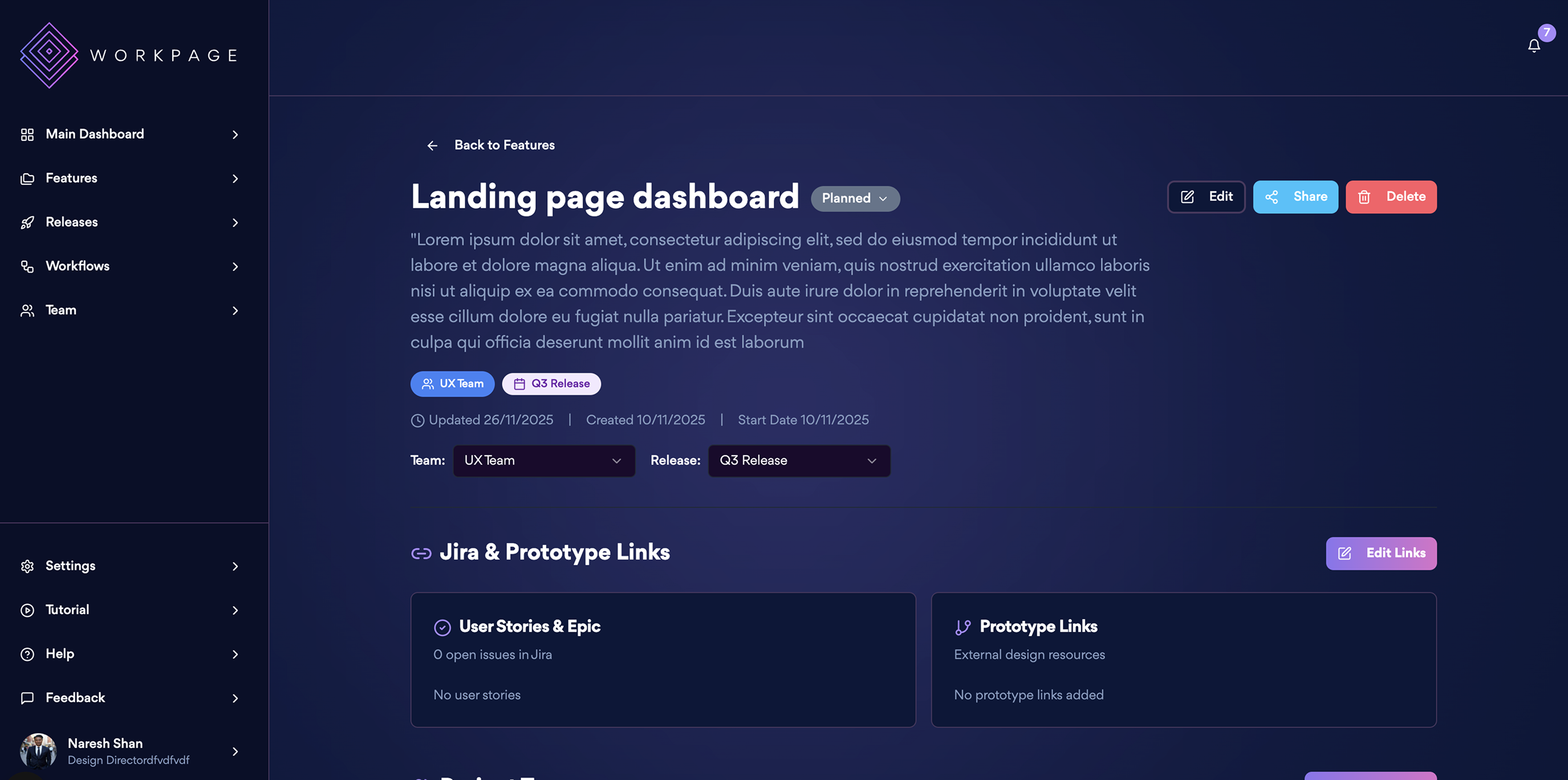
With the technical foundation established, I designed 23 interconnected screens that balanced complexity with usability. Each feature workspace needed to surface six data types—design files, research insights, decision history, development links, QA tracking, and business metrics—without overwhelming users. I built a progressive disclosure system: core information visible at a glance, detailed context available on demand. The design system used shadcn/ui components with custom modifications for workspace management, real-time collaboration indicators, and inline commenting threads. I shipped the MVP in 8 weeks with a React/TypeScript frontend, Node.js API layer, and PostgreSQL database, then immediately deployed it to 10 early adopters for validation.
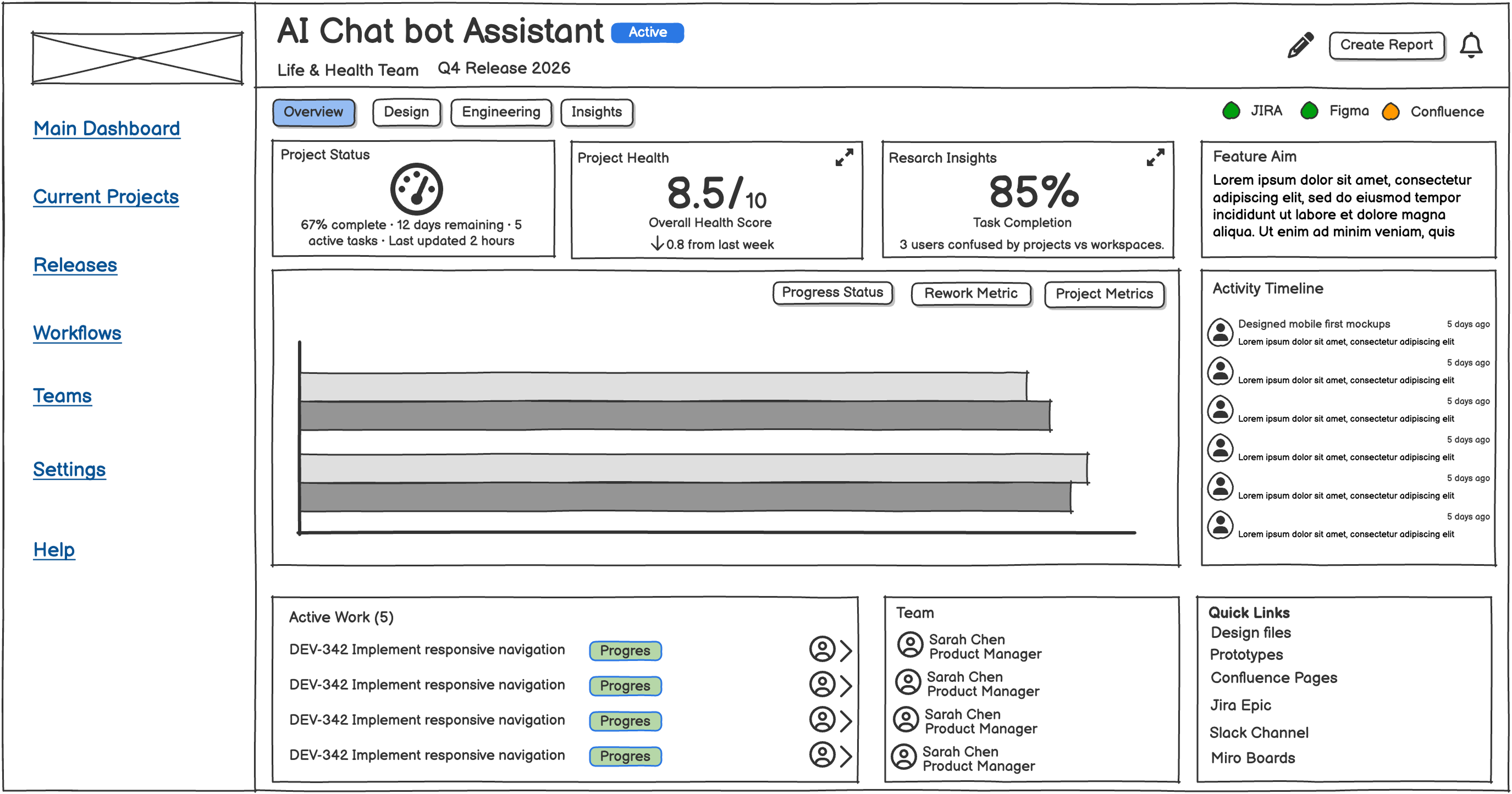
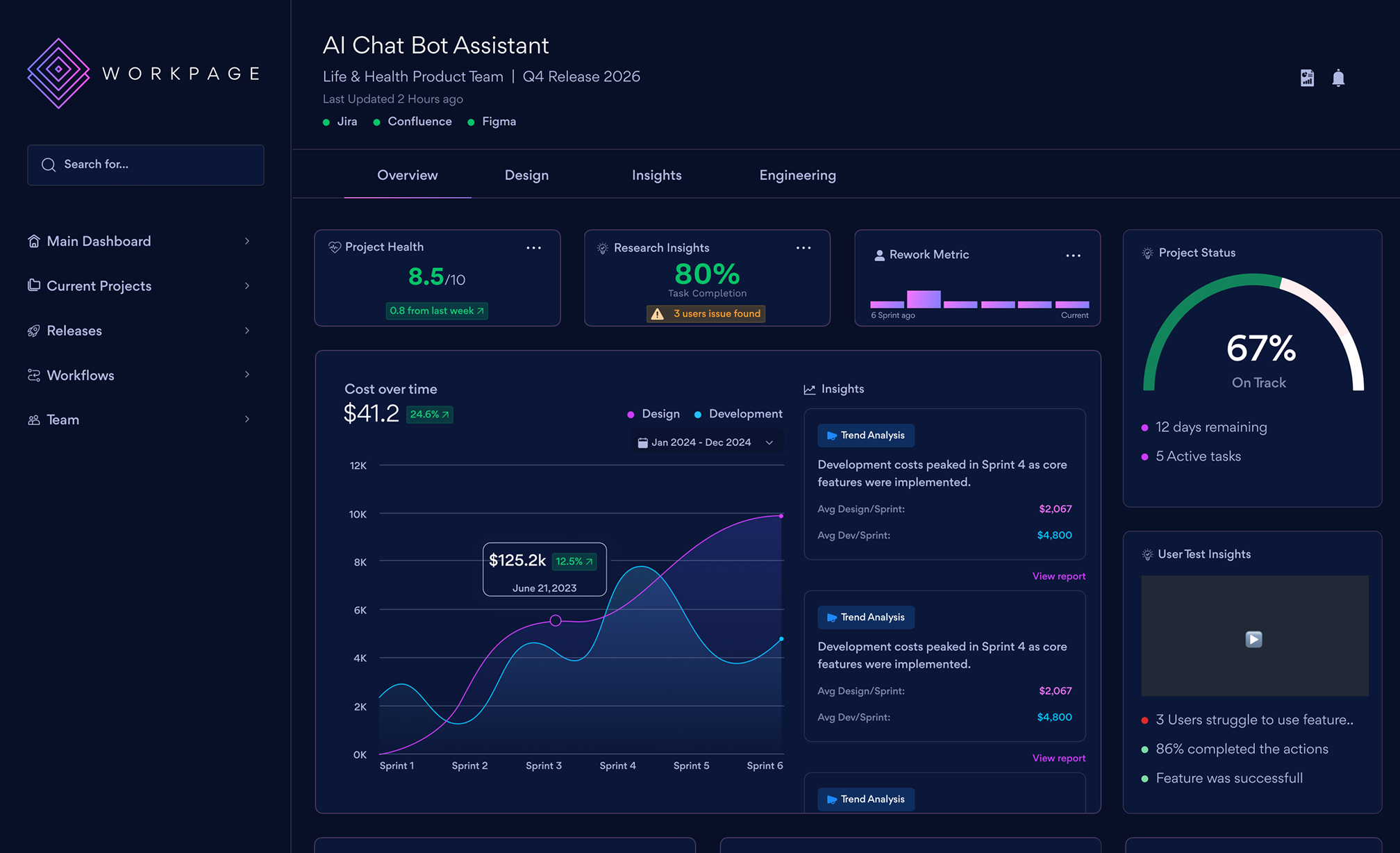
The feature workspace consolidates everything about a single feature: linked Figma files with version history, inline design annotations visible to developers, decision logs showing who chose what and why, automated user testing results with video playback, Jira ticket integration for dev tracking, and ROI metrics comparing estimated vs. actual business impact. Information density was critical—PMs needed comprehensive data while designers required visual clarity and developers wanted technical specifications. The interface adapts based on user role, surfacing relevant data first while keeping everything accessible within two clicks.
Built-in user testing eliminated the $200/month UserTesting.com subscription while making validation 10x faster. Designers upload prototypes, write test scripts, and launch studies directly from WorkPage. The system recruits participants, records sessions, and generates annotated clips highlighting key interactions. Test results appear alongside the design files they validate, creating an empirical feedback loop. This integration increased testing frequency from once per quarter to 3-5 times per feature cycle, catching usability issues before development rather than after launch.
The handoff interface solves the specification ambiguity problem: developers see Figma designs with linked technical annotations, edge case documentation, interaction specifications written in plain language, and a complete decision history explaining why each choice was made. When designers update Figma files, changes sync automatically with WorkPage timestamps and change logs. Developers can ask questions inline, tag designers, and mark specifications as clarified. This eliminated 40% of rework caused by misunderstood requirements, as measured across our early adopter cohort.
LESSONS FROM BUILDING WORKPAGE
The handoff interface solves the specification ambiguity problem: developers see Figma designs with linked technical annotations, edge case documentation, interaction specifications written in plain language, and a complete decision history explaining why each choice was made. When designers update Figma files, changes sync automatically with WorkPage timestamps and change logs. Developers can ask questions inline, tag designers, and mark specifications as clarified. This eliminated 40% of rework caused by misunderstood requirements, as measured across our early adopter cohort.
Features as the atomic unit changed everything. Design, research, decisions, development, testing, metrics cluster naturally. Users found information 8x faster—they knew where to look: the feature workspace where work originated_
Teams needed WorkPage inside existing workflows, not as another tool. Deep Figma version sync beat shallow connections to 20 platforms. Bidirectional Jira links that auto-updated built trust. Early versions spread too thin—focusing three platforms deeply drove adoption_
Automated user testing became the primary adoption driver. Designers validating in hours restructured around rapid cycles. Testing real users cut design re-litigation 70%—decisions had data. Tested features shipped at 90% implementation accuracy versus 70% untested_
Per-user pricing blocked adoption—teams restricted access to save costs. Flat-rate ($25-$79/month, unlimited users) changed behavior instantly. Teams added entire departments. Trial conversion jumped 12% to 34%—no seat calculation or budget approval. Full org trials replaced restricted pilots_